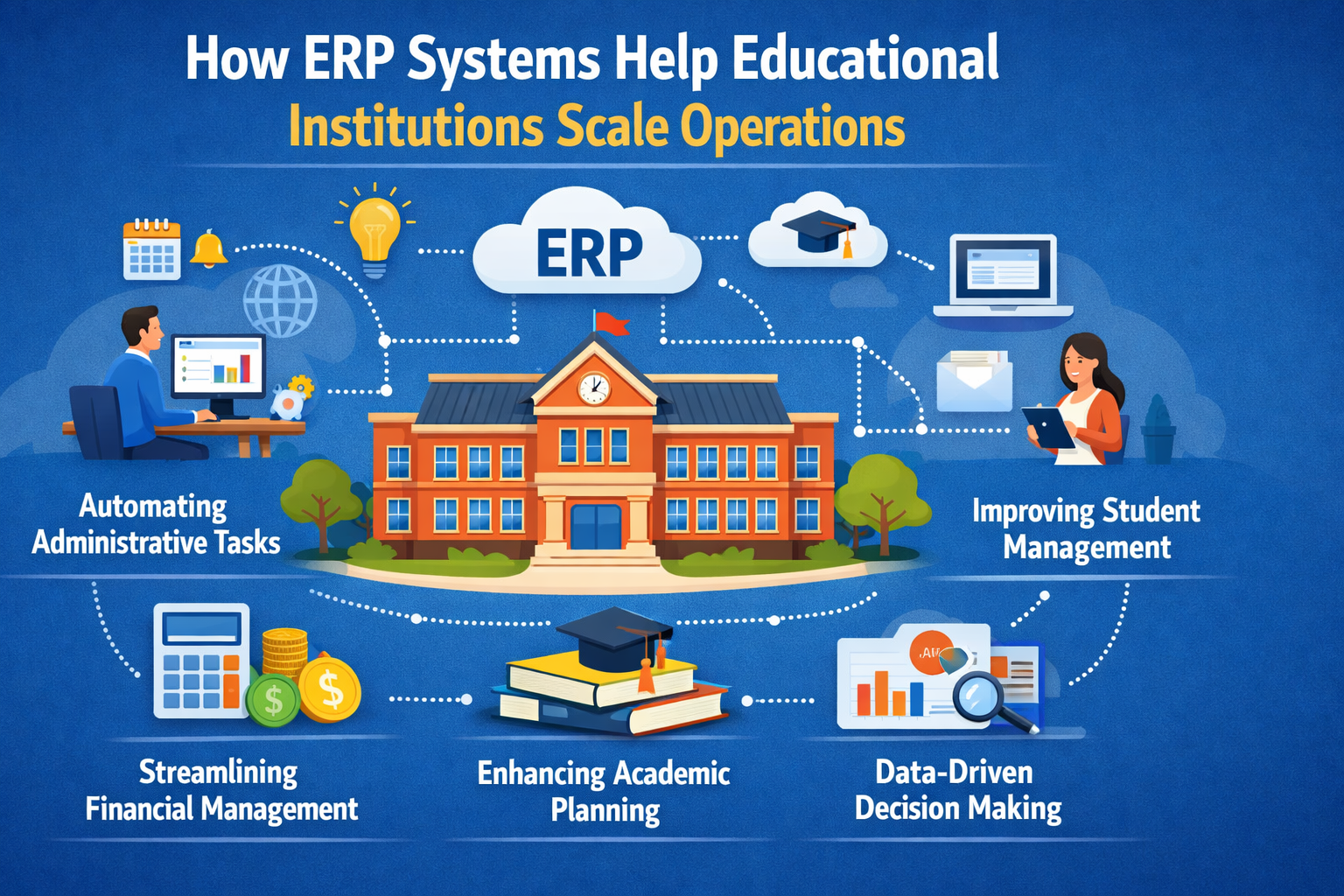
Educational institutions today are evolving rapidly to meet growing student expectations, regulatory requirements, and technological advancements.
Schools, colleges, and educational institutions are not limited to educational and administrative tasks; rather, these institutions are also involved in dealing with multiple aspects, from academics to infrastructure.
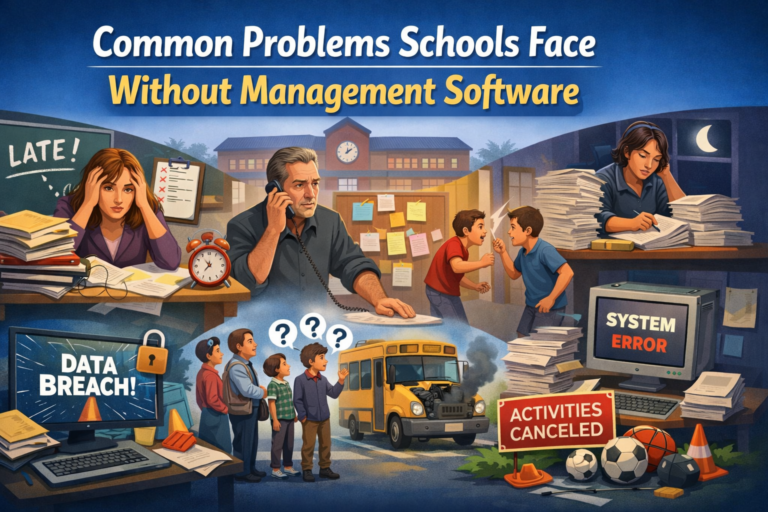
With the rapid growth in size, it becomes inefficient to deal with different tasks and areas through manual processes or various software applications.
It is at this stage that school ERP systems come into play. Enterprise resource planning education solution software streamlines processes for the institution, enabling data management and scalability without compromising control.
A properly implemented school management ERP system is, in effect, the driving force for growth at any institution, ensuring effective coordination of operations at all levels.
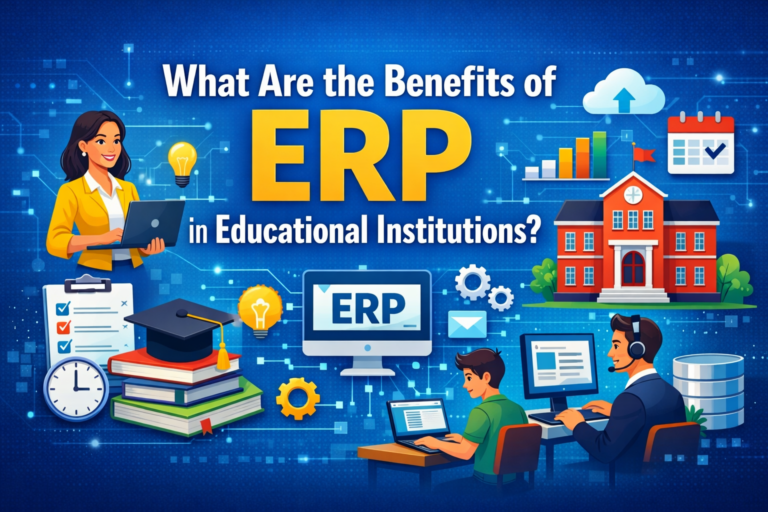
Let’s understand the erp system and its importance in the education sector through this blog.
Understanding ERP Systems in the Education Sector
ERP systems can be defined as integrated software systems that handle various processes in an organization using one common system. In the education industry, the systems in place have been designed to manage academic processes within institutions.
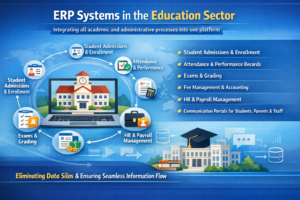
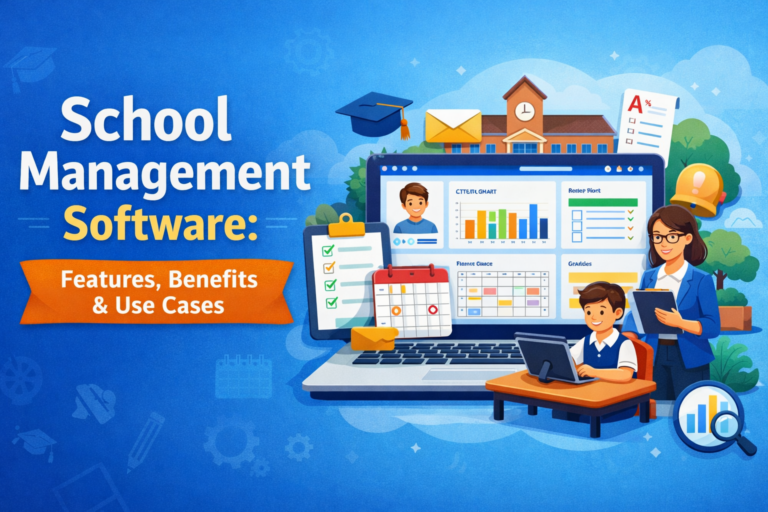
A complete school management ERP system would include:
- Student admissions and enrollment
- Attendance and performance records
- Test and rating procedures
- Fee Management and Accounting
- Human resource and payroll management
- Catering to the needs of the general public
- Communication portals for students, parents, and staff
Through the integration of the above functions, ERP systems remove data silos and provide a smooth flow of information within the institution.
The Need for Scalable Operational Systems in Education
Scaling an educational institution involves much more than increasing student intake. It requires efficient management of infrastructure, faculty, finances, academic delivery, and compliance.
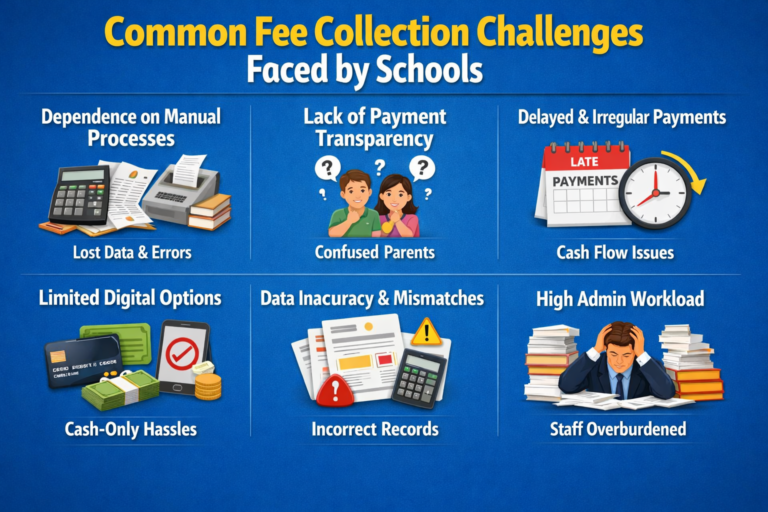
Without a strong digital framework, growth often leads to operational bottlenecks such as duplicated data, delayed reporting, miscommunication, and increased administrative workload.
ERP systems address these challenges with a structured, automated, and scalable approach to institutional management.
As the number of students grows or as campuses expand, an ERP can scale seamlessly without changing any workflow processes.
Centralised Data for Better Decision-Making
Centralized data management of ERP systems is one of the most major advantages. This implies that all the different departments access and work with a common database.
Be it student data, administrative data, or financial data, all data is up-to-date and available to those who can access it.
Such centralization facilitates scalability as it allows leadership teams to make data-informed decisions.
Campuses can identify trends in enrollment, academics, and financial positions, which helps them make plans towards scaling.
Automation of Administrative Workflows
The day-to-day office work absorbs a considerable amount of resources. The ERPs enable institutions to automate tasks related to admissions, student/employee attendance, tuition fee collection, salary payment, and generation of reports.
Automation decreases the possibility of human error, increases the speed of processes, and maximizes productivity.
This is because as the institution grows in size, automation helps to ensure that the workload does not overwhelm the administration.
Improved Academic and Student Management
ERP systems play an important role in the smooth management of academic operations. A faculty can access the records of the students, grade uploading, attendance tracking, and monitoring their academic progress through one single platform. Similarly, there is better timetable scheduling, less confliction and examination management delay.
Academic schedules, results, assignments, and notifications are more accessible, thus enriching the learning experience and enhancing student involvement even as an institution expands.
Financial Transparency and Control
With the scaling of institutions, the finances tend to become more complex. ERP systems have strong financial modules that track incomes, expenses, budgeting, and audits in real time.
Fee management systems automate the invoicing, payment, and receipt process with accuracy and transparency.
Reliable financial insights enable the proper apportioning of available resources, planning the expansion of infrastructure, and compliance with the various regulatory standards. Financial control is basically necessary for sustainable and responsible growth.
Strengthening Communication Across the Institution
The more an institution grows, the more difficult communication becomes. This gap is filled by ERP systems, which incorporate communication functionality to connect parents, students, teachers, and administrators.
Announcements, notifications, exam schedules, and fee reminders can be shared instantly via dashboards, emails, or notifications on mobile devices. This will ensure that all stakeholders are all on the same page and avoid confusion.
Facilitating Multi-Campus and Online Learning Initiatives
Today, many organizations have multiple campuses or offer online learning programs. ERPs are capable of managing such a diverse environment with centralized control and decentralized access.
It will allow campus administrators to manage multiple campuses on one platform, with flexibility for different campus settings. It will integrate with the Learning Management System and will suit colleges undergoing digital and hybrid transformation.
Selecting the Right ERP System for Educational Growth
As there exist various number one ERP solutions out in the market, selecting the apt one is the most essential task. Educational institutions need to think beyond a general ERP solution and implement solutions specifically tailored for the educational industry.
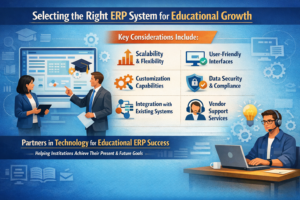
Key considerations include:
- Scalability and Flexibility
- Usability-oriented interfaces
- Customization capabilities
- Data Security and Compliance
- Integration with existing systems
- Vendor support services
Partners in technology who understand educational ERP development can prove helpful for educational institutions in implementing solutions that cater to their requirements in the present as well as for their future development plans.
Customisation and Long-Term Value
Each institute has its own set of operational needs. Customizable ERP solutions enable their adaptation to suit their organizational structure and governance framework.
Organizations such as Cadence Infotech are working on making scalable ERP systems. The scalability of such systems will change with the growth of institutions.
Data Security and Compliance Assurance
Moreover, the amount of sensitive data grows as the scale of the institutions escalates. ERP systems must emphasize the security of sensitive data by utilizing access control based on roles, encryption, secure backup, and adherence to data protection policies.
A safe ERP environment ensures that the data of the institute remains protected along with instilling confidence among the students, parents, and authorities.
To Wrap up
In the current speedy transition in the educational environment, ERP systems play a crucial role in helping institutions grow. ERP systems achieve this by centralizing information, streamlining processes, improving academic management, and increasing financial transparency.
A contemporary ERP solution for a school enables effective functionality and preparedness for the future.
Institutions can create resilient and scalable ecosystems that ensure quality education while embracing the demands for the future. With the right investment in an ERP solution with Cadence Infotech and the expertise of technology leaders, this can be achieved.